"Come and See!"
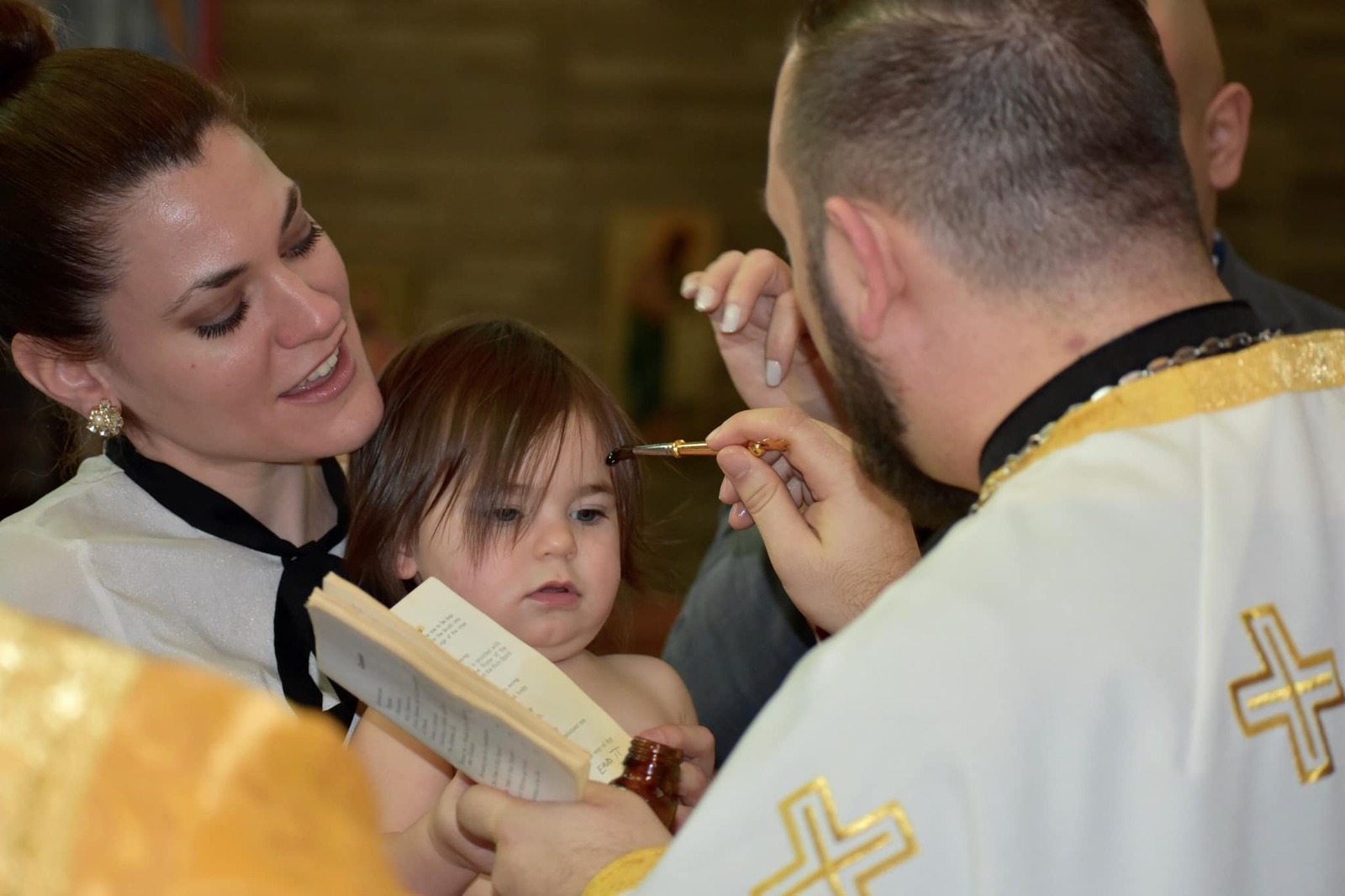
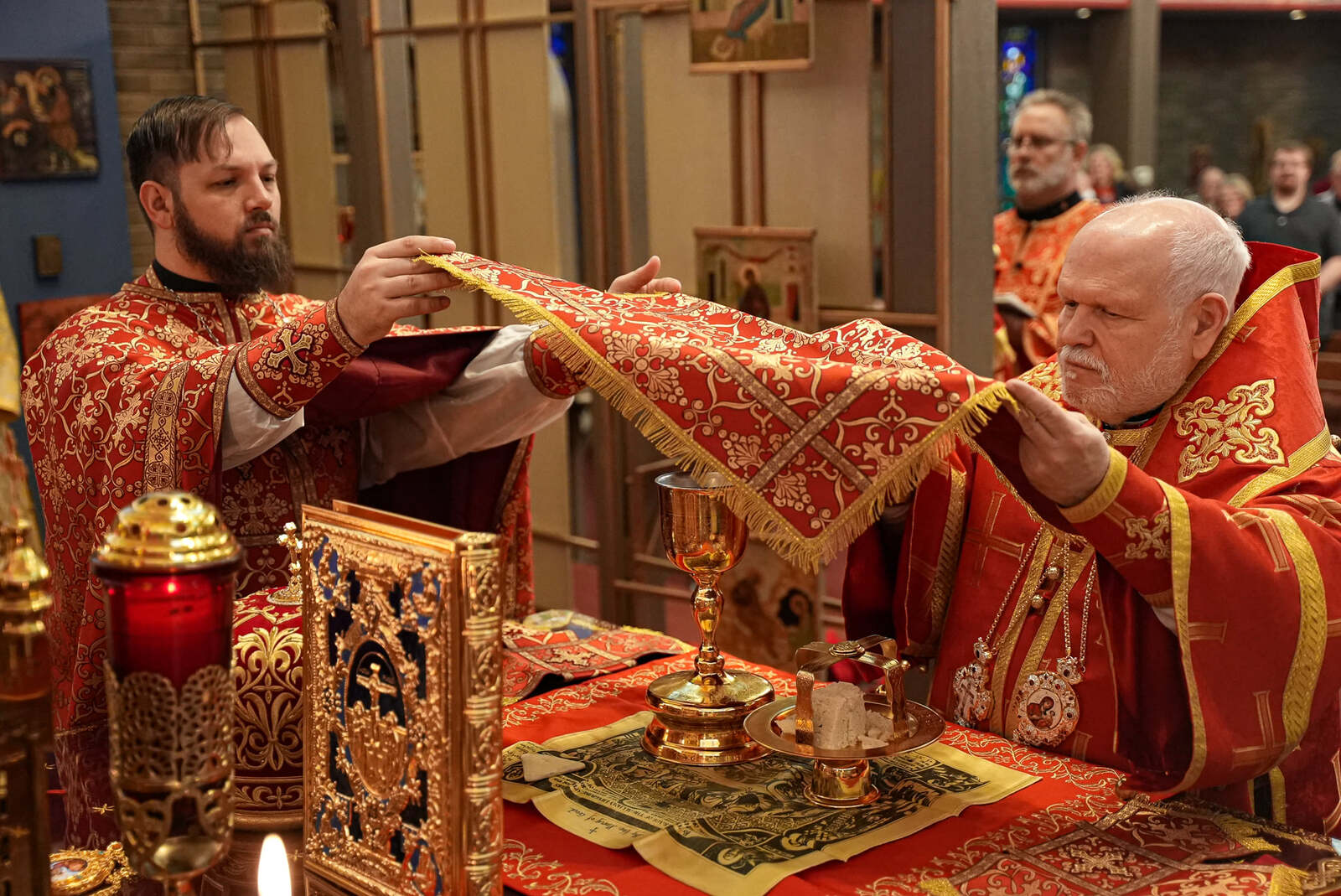
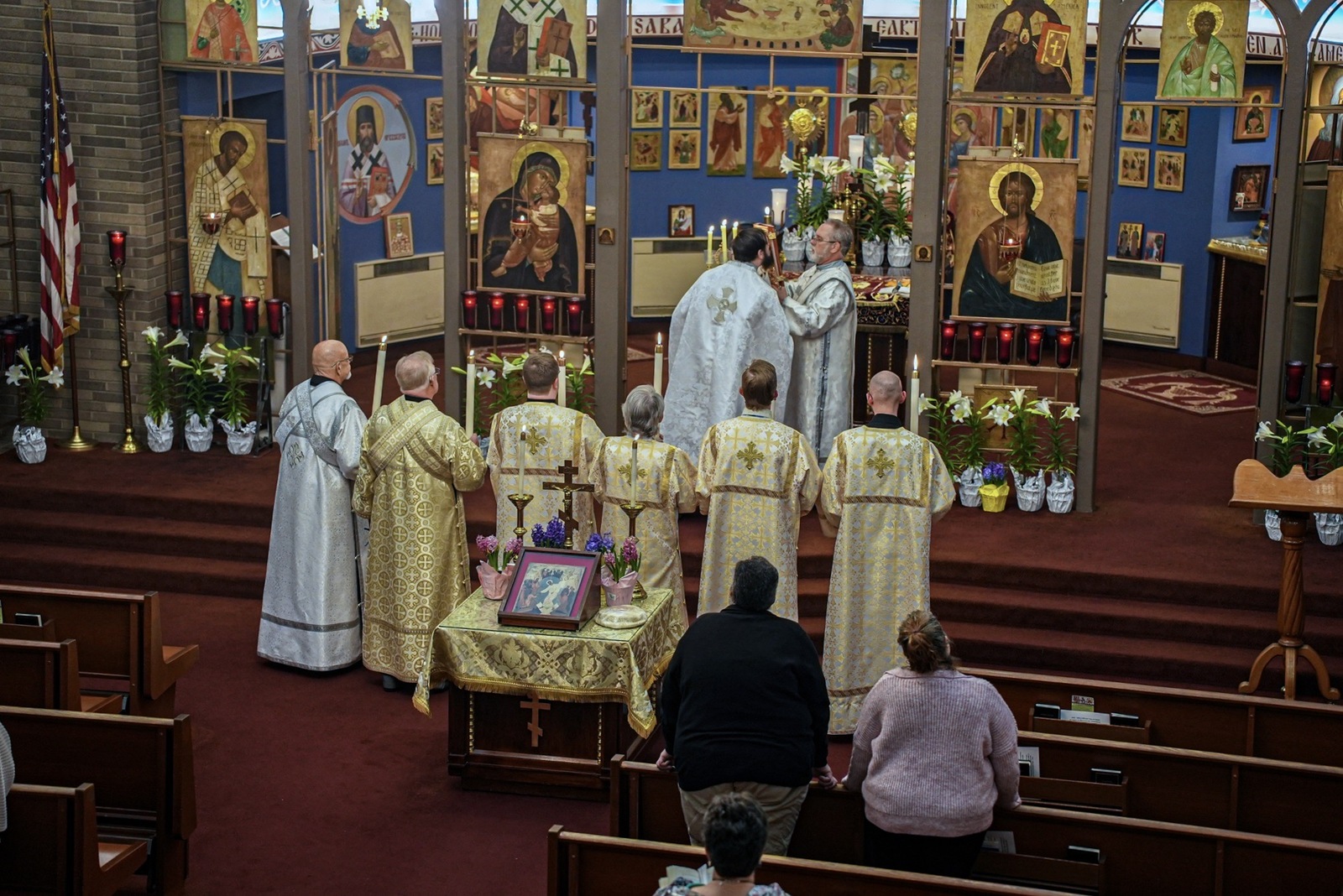
ALL are welcome to join us for any of our Worship Services! "Come and See" what you've been searching for; our heavenly worship is an experience you won't soon forget. Below, for your convenience, are our regularly scheduled service times, as well as a full monthly calendar so you can have the most up-to-date schedule information.
Weekend Services
Sunday - Divine Liturgy @ 9:30 AM
Saturday - Great Vespers @ 5:00 PM
During Great Lent:
Wednesday - Presanctified Liturgy @ 6:00 PM
Check the Weekly Bulletin OR Full Calendar Schedule for any deviation from the above schedule.
If you've never been to an Orthodox Christian worship service before, you're in for an incredible glimpse at what worship was like for early Christians. Yes, you read that right! The Church you read about in the Book of Acts; that's us! Because Christians were Messiahnized Jews, our worship relfects that of Second Temple worship, which was Liturgical in nature. In keeping the Tradition, our services are liturgical by nature, and intentionally incorperate activity on the part of both the clergy and the laity; in other words, we don't simply sit and observe the clergy; we actively participate in the services - this immersive experience can be a lot to take in and digest if you're not accustomed to this way of worship. Orthodox Christian worship is also unique in that it engages all fives senses during worship. Regardless of who you are and where you're coming from, we're thrilled to welcome you and hope you find yourself warmly welcomed and comfortable.
Before going any further we want you to know you're welcome to visit us just the way you are. Sure, we have a way of doing things, but we don't expect every visitor or inquirer to know everything or "get it right" the first time. We understand what it's like to be a fish out of water, as most of us have visited other Churches for various reasons (weddings, funerals, baptisms, etc). The best way to learn about who we are, what we believe, and what worship is like is to come and observe.
For your conveninence we've compiled "10 Things You Should Know" before visiting an Orthodox Church. If you don't want to read, check out our LIVESTREAM to see and hear the sights and sounds of our worship!
During the early part of the service, you may see people walking up to the front of the church, say a brief prayer in front of one of the icons (the standing icons in front of the altar), kissing it and lighting a candle, even though the service has already begun. In the Orthodox church the main service is called the Divine Liturgy (The work of the people) and is celebrated each Sunday and sometimes on weekdays. It is preceded by an hour and a half service called Matins (or Orthros). There is no break between these services, one begins as soon as the previous ends. Matins is comprised of readings from the book of Psalms, the Gospel, and has many hymns. It typically precedes the Divine Liturgy, though it can stand alone as a service in the church. Orthodox worshippers arrive at any point from the beginning of Matins up until the beginning of the Divine Liturgy. Though some come late to the Divine Liturgy, it’s not a good practice. Just as you wouldn’t show up to a movie fifteen minutes after it has already started.
In the Orthodox tradition, the faithful stand up for nearly the entire service. The reason for this is that we understand worship to be work. Sitting is a form of rest. We believe that when in the presence of God, we should all stand. If you find the amount of standing too challenging, you're welcome to sit at any time. The liturgy at Saint John’s begins at 9:30 AM. Around 9:50 AM we hear the reading of the Epistle, one of St. Paul’s letter; Immediately following the Epistle, a passage from one of the Gospels is read, for which everyone stands as the Good News is being proclaimed. After the reading of the Gospel, the priest gives a sermon. Around 10:30, the Faithful, who have prepared themselves, receive Holy Communion.
We sign ourselves whenever the name of the Trinity is invoked (Father, Son, and Holy Spirit). The faithful also make the sign of the cross whenever they venerate the cross or an icon, and on many other occasions during the course of the Liturgy. People, however, aren't expected to do everything the same way. Some cross themselves three times, and others just once. When first entering the church people typically approach the icons in the Narthex (foyer), make the sign of the cross and a slight bow, and then kiss the icon, and then make one more bow. This becomes familiar with time, don't worry, you don't have to follow suit.
When we first enter the church, we light a candle, and we kiss (venerate) the icons. You may also see that some kiss the chalice after receiving Holy Communion. When the priest comes in procession at one point, some touch the edge of his vestment as he passes by. The altar servers kiss his hand when they give him the censer, and we all line up to kiss the priest's hand at the end of the service as we receive the blessed bread. When we talk about "venerating" we simply mean showing reverence. The reason for kissing the hand of the priest has to do with our understanding that during the liturgy the hands of the priest are Christ's hands. The priest also holds in his hands the "Body of Christ" while he prepares the chalice. It is also through the laying on of hands that that ordinations are done by the bishops. The laying on of hands goes back to the Apostles in the Orthodox Church.
Only Orthodox may receive Holy Communion, but anyone may receive what is called (Andithoron) “blessed bread” offered at the conclusion of the liturgy. We receive this from the hand of the priest. Visitors are sometimes offended that they are not allowed to receive Holy Communion. Orthodox believe that receiving communion is broader than me-and-Jesus; it acknowledges one’s faith and belief in historic Orthodox doctrine, obedience to a particular Orthodox bishop, and a commitment to a particular Orthodox worshipping community. There's nothing exclusive about this; everyone is invited to make this commitment to the Orthodox Church. But the Eucharist is the Church's treasure and is reserved for those who have united themselves with the Church through Holy Baptism and Chrismation. We also hold Holy Communion (The Eucharist) with more gravity than many denominations do. We believe it is truly the Body and Blood of Christ (John 6). In fact, Orthodox believers do not receive communion unless they have properly prepared themselves by receiving the mystery of confession, fasting, asking forgiveness from those they may have offended and forgiving others who have offended them. On the morning we wish to receive Holy Communion (unless there are reasons one is unable to) we fast from all food and drink from midnight the night before, yes, even a morning cup of coffee.
In the Orthodox tradition, we call the priest “father” and then his name. St. Paul in his First Letter to the faithful in Corinth wrote: “I do not write this to make you ashamed but to admonish you as my beloved children. For though you might have 10,000 guardians in Christ, you do not have many fathers. Indeed, in Christ Jesus I became your father through the Gospel” (1 Corinthians 4:14-15). He also describes his relationship with the Christians of the Church in Thessalonica as being “like a father with his children” (1 Thessalonians 2:11), and he calls the apostle Timothy his son (I Timothy 1:2). The wife of the priest also holds a special role as parish mother and has the title of "Presvytera" (Greek), which means "wife of the presbyter." Another difference you may notice is in the Nicene Creed, which is recited at one point in the Liturgy. If we are saying that the Holy Spirit proceeds from the Father, and you from force of habit add, "and the Son," you will be alone. The phrase, “and the Son” (filioque) was added by the Roman Catholic church some six hundred years after it was written and accepted by the Church.
In some Orthodox parishes you will see both Chanters and Choirs. At Saint John’s our music is offered by a four-part Choir. All services and hymns are in the English language. Traditionally, hymns are sung a cappella. Its been said, "When you sing, you pray twice." Our hymns aren't difficult, if you have a book and can catch on to the melody, let the Lord hear your voice!
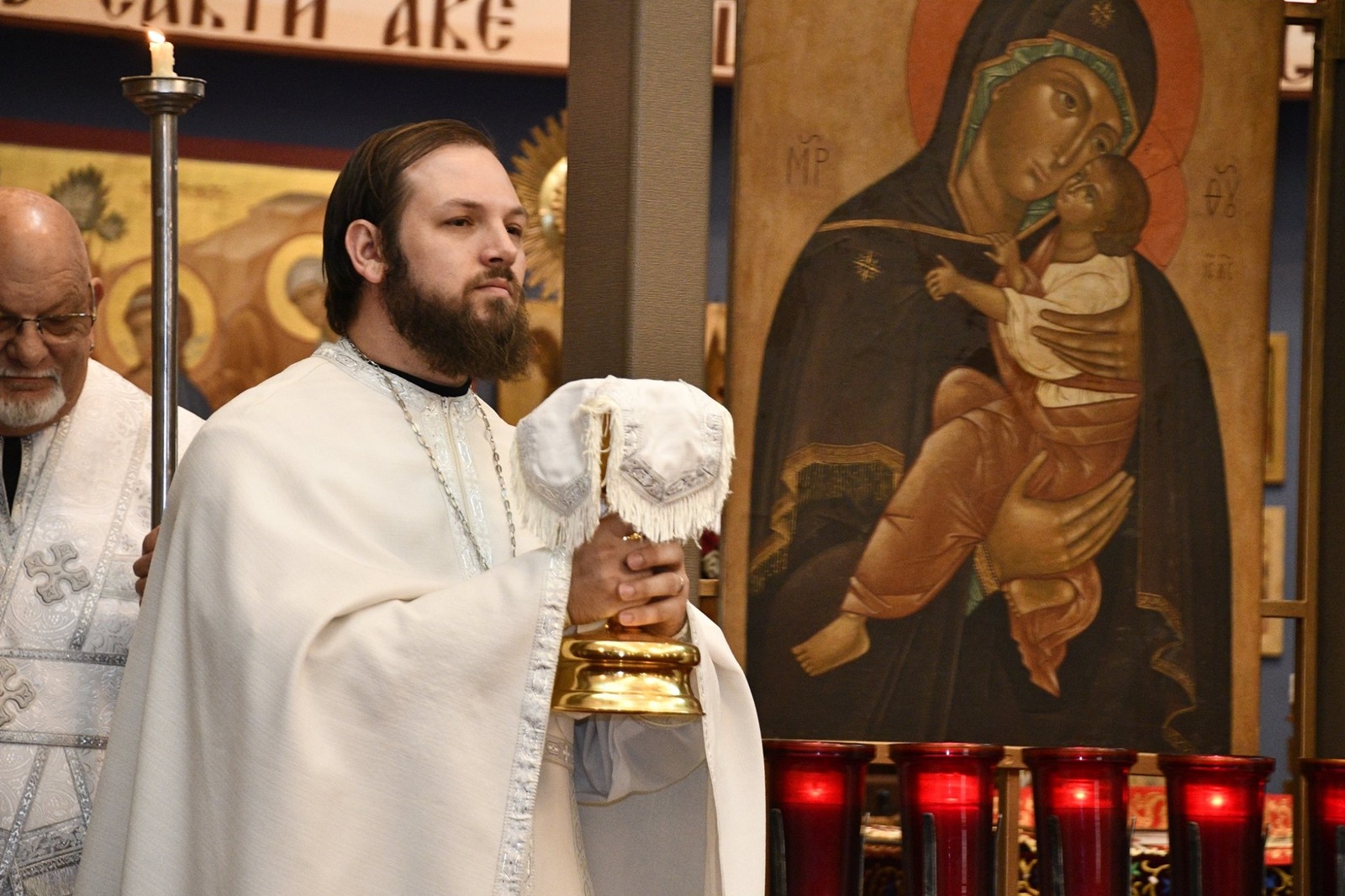
A constant feature of Orthodox worship is the veneration of the Virgin Mary, the "champion leader" of all Christians. We refer to her as "Theotokos," which means the one who “bore God,” providing the physical means for God to become man, and thereby making possible our salvation. We honor her, as Scripture foretold, "All generations will call me blessed" (Luke 1:48). When we sing "Through the intercession of the Theotokos, Savior, save us," we don't mean that she grants us eternal salvation, rather we ask for her prayers and intercessions, as she is the mother of God and especially close to her Son. Just as we ask for each other's prayers, we ask for the prayers of Mary as well as the Saints, who are alive in Christ for all eternity. Since there is no death in Christ, even those who have passed on from this life, remain alive and continue to pray for those in the world. They're not dead, just departed from this world to the world to come. The many icons in the church which surround us are part of the “great cloud of witnesses” (Hebrews 12:1) and remain a part of the Church, the Body of Christ. They are now a part of the Church Triumphant, while we still comprise the Church Militant on earth. These two are not separated but one.
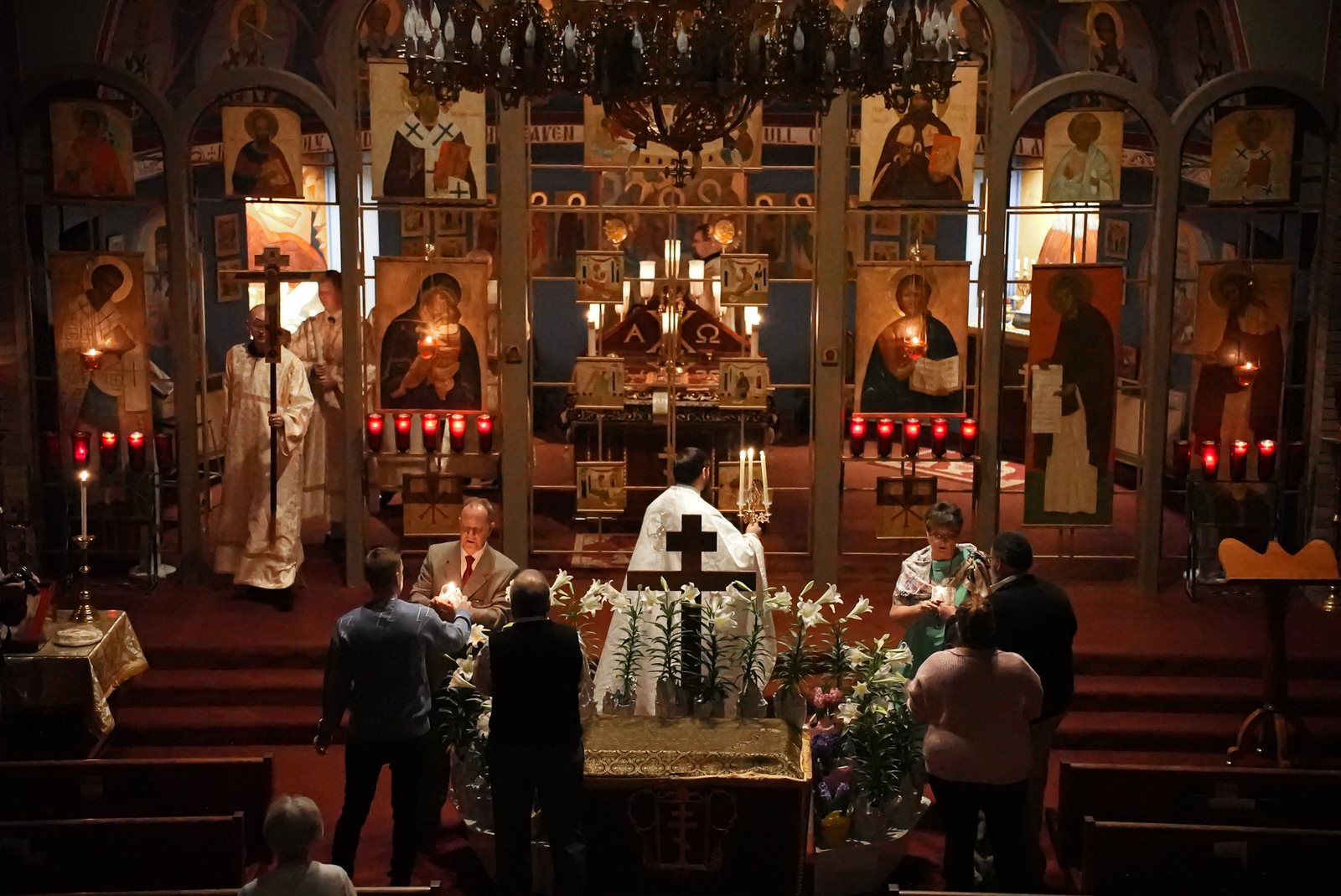
Every Orthodox church has an icon screen "Iconostasis", which stand between the Holy Altar and the Nave of the Church. It does not act as a barrier, but a symbolic link between the Altar, which represents the Kingdom of Heaven and the Nave, which represents the world. Every iconostasis has a large image of Christ on the right and a corresponding image of the Virgin and Child on the left. The basic set-up of two large icons creates, if you use your imagination, three doors. The central one, in front of the altar itself, is called the "Holy Doors" or "Royal Doors," because there the King of Glory comes out to the congregation in the Eucharist. Only bishops, priests and deacons, who bear the Eucharist, use the Holy Doors. The openings on the other sides of the icons, if there is a complete iconostasis, have doors with icons of angels; they are called the "Deacon's Doors." Facing the Altar, the door on the left has a large icon of the Archangel Michael, while the door on the right bears the image of the Archangel Gabriel. Acolytes and others with responsibilities behind the altar use these two side doors, although no one is to go through any of the doors without an appropriate reason.
There are about 6 million Orthodox in North America and 250 million in the world, making Orthodox Christianity the second-largest Christian body. Orthodox throughout the world hold unanimously to the fundamental Christian doctrines taught by the Apostles and handed down by their successors, the bishops, throughout the centuries. One could attribute this unity to historical accident. We would attribute it to the Holy Spirit. Currently the largest American jurisdictions are the Greek Orthodox Archdiocese, The Orthodox Church in America (Russian roots), and the Antiochian Archdiocese (Arabic roots). The liturgy is essentially the same in all, though there may be variation in language used, the type of music and some basic rubrics. Orthodoxy seems startlingly different at first, but as the weeks pass, it gets to be less so. It will begin to feel more and more like home, and will gradually draw you into your true home, the Kingdom of God. I hope that your first visit to an Orthodox church will be enjoyable, and that it won't be your last. Keep in mind you are walking into the Christian Faith of 2,000 years, and the Divine Liturgy, the main service of worship, was composed over 1,700 years ago and yet remains unchanged.
FYI's and Other Helpful Things
When should you definitely stand?
Lighting Candles
Entering the Church (Late)
Crossing Those Legs?
In and Out
Leaving Before Dismissal
Blot that Lipstick!
Venerating Icons
Talking During Church
Kiss (Don’t Shake) the Priest’s or Bishop’s Hand
Sunday Dress
Children: Only young children (under 10) should wear shorts to church — and then only dress shorts. Athletic shorts, cut-offs, and spandex shorts are never appropriate church wear (for children or adults!). Shoes or sandals should be clean and tied. No one should wear T-shirts with any kind of writing on them (“This Bud’s for You!” is definitely out).
Women: Dresses should be modest. No tank tops or dresses with only straps at the shoulders, no short skirts (mini-skirts), and no skin-tight dresses. Dresses should have backs and not be cut low in the front. If women wear pants to church, they should be dress pants (not jeans, leggings, etc.). Shorts of any type are not appropriate for church.
Men: Men should also dress modestly. While coat and tie are not mandatory, shirts should have collars and be buttoned to the collar (the actual collar button may be left undone, but two or three buttons undone is inappropriate). Slacks should be cleaned and pressed. Jeans (of any color) are usually too casual for church, especially ones with patches or holes. Again, shorts are not appropriate church wear. If you’re going somewhere after church where you need to dress casually, bring a change of clothing with you and change after coffee hour. Remember, use your best judgment and good taste when dressing for church. After all, you don’t go to be seen by everyone else — you go to meet and worship God.
Pew Blocking
To Cross or Not To Cross
To Cross: When you hear one of the variations of the phrase, “Father, Son, and Holy Spirit”; at the beginning and end of the liturgical service or your private prayers; entering or exiting the church, or when passing in front of the Holy Altar; before venerating in icon, the cross, or Gospel book.
Not to Cross: At the chalice before or after taking Communion (you might hit the chalice with your hand); when the priest or bishop blesses saying, “Peace be to all” — bow slightly and receive the blessing; when receiving a blessing from a bishop or a priest (kissing the right hand of the bishop or priest is appropriate, but not making the sign of the cross).
Snacks for Children
- Take your children to light candles and venerate the icons at the beginning of service. Be sure to say a prayer with each candle and make your cross. Upon veneration of the icons, teach your children to pay attention to the icons on the analoy/tetrapod - these icons typically indicate the feast.
- Don’t hide in the back - stand in the front where children can see what’s taking place during the services. Don’t be afraid to challenge your children to stand as much as they're able to during the services and face forward - this is where all the action is happening! While sitting in the back might seem easier, it legitimately does your children a huge disservice.
- Engage your children; ensure they're making their cross at the appropriate times, bowing at the appropriate times, and reciting appropriate prayers when they're said/sung. These prayers should be said at home to help them learn and be able to participate at Church.
- Challenge your children to pay attention to the Epistle/Gospel/Sermon, and quiz them.
- Educate your children during services. Explain the meaning of the censer, processions, etc. And if you don't know, ask your priest! It's never too late to learn!
- Keep talking and bathroom breaks to a minimum.
- Do not hang out in the Narthex or Sunday School Rooms; the Narthex is technically part of the Church, and should not be treated as a casual space. Hanging out in the nursry and sunday school rooms for extended periods of time is inappropriate; our little ones should be in the appropriate space and aware of what is going on.
- Teach your children that the Church is where God dwells; it is a very special and holy place where good behavior is not only suggested, but required.
- Our little ones have rules at school and standards/expectations to abide by. Gods house is no different. It's never too late to set the bar, and put a reasonable level of age-appropriate expectation on your little ones.
- Tablets, arts/crafts, toys, disruptive play (crawling, walking around, talking, constant in & out, etc) and other things that could be distracting to others are strongly discouraged. Please be mindful of the others who desire a calm, peaceful worship.
- Remember, we're all doing our best! We love hearing the occasional rustle and bustle of the little ones - it means the Church is alive and well! We're here to encourage and support you! If you need help with your little ones, let us know how we can support you. We’re family! We’re here to help!
Handling the Holy Bread
A Final Thought
When you enter a Saint John the Baptist Orthodox Church service or event, you will be entering an area where photography, video and audio recording, or live streaming may occur.
Saint John the Baptist Orthodox Church takes photographs and/or makes audio and/or video recordings of members involved in church related activities. Staff and/or participants may use such photographs or video records to recall activities or participants. In addition, such photographs and audio/visual recordings may be used in Saint John the Baptist Orthodox Church publication and marketing materials to let others know of our ministries, and/or streaming and website hosting of Divine Services.
By entering the Church/event premises, you consent to photography, audio recording, video recording and its/their release, publication, exhibition, or reproduction to be used for live streaming, promotional purposes, inclusion on web sites, and/or any other purpose by Saint John the Baptist Orthodox Church. You release Saint John the Baptist Orthodox Church, its clergy, employees, laity, and each and all persons involved from any liability connected with the taking, recording, digitizing, and/or publication of photographs, computer images, video and/or sound recordings.
By entering the Divine Services/event premises, you waive all rights you may have to any claims for payment or royalties in connection with any exhibition, streaming, webcasting, or other publication of these materials, regardless of the purpose. You also waive any right to inspect or approve any photo, video, or audio recording taken by Saint John the Baptist Orthodox Church or the person or entity designated to do so by Saint John the Baptist Orthodox Church. If at anytime you find a photo or video on our website or YouTube channel that you prefer to have removed for privacy or safety reasons, please contact us @ saintjohnswarren@gmail.com
If you prefer not to be recognized on camera, the back rows inside the Church are not within viewing distance of a camera and Communion will typically be only on a wide-shot where it will be difficult to recognize congregants.
You have been fully informed of your consent, waiver of liability, and release before entering the Divine Services/event.